Phys.Org |
|---|
Stem cell–derived nanoparticles modulate immune cells and help delay type 1 diabetes in mice |
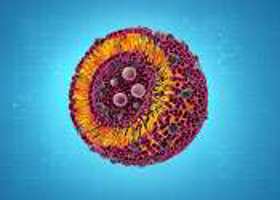
In people with type 1 diabetes, the immune system mistakenly identifies insulin-producing cells in the pancreas as foreign and attacks them, leaving the body unable to properly regulate blood sugar. While insulin therapy ... |
||
|
2026-11-18 Read more about this article in source |
||



-

Understanding and improving plants often requires changing what happens inside their cells. Proteins control how cells grow, respond to stress, and carry out countless other tasks. Delivering these molecular tools directly ... 11/18/2026
-
Phys.Org more ...
Stem cell–derived nanoparticles modulate immune cells and help delay type 1 diabetes in mice

In people with type 1 diabetes, the immune system mistakenly identifies insulin-producing cells in the pancreas as foreign and attacks them, leaving the body unable to properly regulate blood sugar. While insulin therapy ... 11/18/2026
-

We report the nanofiber-reinforced composite electrodes as the highly transparent (~90%) and extremely foldable electrodes with lower sheet... 11/18/2026
-
Springer more ...
Degradation of Carbon Nanofiber-Reinforced Composite Under Loading and Environmental Conditions

This chapter concentrates on the MD simulation of carbon nanofiber-reinforced composites, with the focus on the molecular interactions, structures,... 11/18/2026
-

Polymeric nanofibers with their large surface area per unit mass, biocompatibility, easy fabrication and surface modification find extensive use as... 11/18/2026
-

Because they improve tissue and organ creation, nanofibers, which have diameters between 1 and 1000 nm are essential for tissue engineering. 11/18/2026
-

Diabetic ulcer is a prevalent complication affecting a large number of individuals globally and presents a significant challenge in healthcare, often... 11/18/2026
-

The review examines how Safe and Sustainable by Design (SSbD) can bring safety, sustainability, and functionality into nanomaterial development from its earliest stages. It connects mechanistic toxicology, predictive modeling, life cycle assessment, international policy, and industrial practice while identifying remaining gaps in standardization, data integration, and routine implementation. 11/18/2026
-

PI (Physik Instrumente), a manufacturer of high-precision motion control, nanopositioning, and automation systems, reports that manufacturing output at its U.S. headquarters in Shrewsbury, MA, has more than doubled compared with the year preceding the move. 11/18/2026
-

The acidity of tissues can provide important clues about a disease. Tumors and inflamed tissues often become more acidic than their surroundings because of changes in cellular metabolism. Measuring these pH variations could ... 11/18/2026
-
Phys.Org more ...
Lasers near physical limits of miniaturization open possibilities for tracking life at the nanoscale

From tracking how cancer develops to exploring how the brain works, scientists need ways to observe biological processes at increasingly smaller scales. Beyond tracking how cells move and interact, researchers need to understand ... 11/18/2026
-
Phys.Org more ...
Engineered gel controls particle release to help injured spinal cord cells recover in lab

Researchers at the FAMU-FSU College of Engineering have developed a gel that delivers therapeutic particles to injured spinal cord cells, a potential step toward new treatments for spinal cord injuries. 11/18/2026
-

Researchers used sequence-specific peptides to make gold nanoparticles aggregate in response to CO2, with the rate and extent of assembly depending on peptide structure and gas flow. They carried the response into centimeter-scale hydrogels, where CO2 produced visible color changes and spatial patterns that could be reversed with alkaline treatment. 11/17/2026
-

Researchers used continuous-flow laser melting in liquids in a flat-jet reactor to form boron carbide-based sub-micrometer spheres while systematically varying laser fluence, pulse number, and interpulse delay. The results showed that particle growth was governed by both thermodynamic melting conditions and kinetic limits on aggregation and fusion, while higher fluence triggered fragmentation into ultrasmall nanoparticles. 11/17/2026
-
AZO Nano more ...
Optimizing Sample Preparation to Measure Chiral Antiferromagnets for Efficient Electronic Systems

Antiferromagnets are regarded as important materials for next-generation electronics. It is difficult, however, to accurately measure some of their properties. 11/17/2026
-

LiCoO2's layered structure and high energy density make it vital for lithium-ion batteries, despite challenges in capacity retention and structural stability. 11/16/2026
-

This research outlines a method for EDS spectra enhancement, focusing on noise reduction and the separation of spectral peaks from the Bremsstrahlung continuum. 11/16/2026
-

This study characterizes the mechanical properties of four polyethylene types using nanoindentation, revealing insights into their performance and durability. 11/13/2026
-

Nanotechnology could help crops withstand drought through nanoparticles, nanobubble irrigation, water-retaining hydrogels, and nanosensors, but challenges remain. 10/08/2026
-
AZO Nano more ...
Structure-Property Relationship of Electroplated Cu Film by Combining Electron Backscatter Diffraction (EBSD) and High-Speed Nanoindentation Techniques

High-speed nanoindentation and EBSD techniques are employed to analyze self-annealed electroplated Cu, highlighting spatial variations in mechanical properties. 10/06/2026