Phys.Org |
|---|
Light-emitting nanoparticles help ultrasound direct gene editing to selected mouse brain regions |
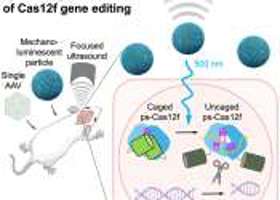
Scientists can now edit genes in precise locations deep in the brain and body without the use of invasive surgery or implants, thanks to new work from researchers at the Wu Tsai Neurosciences Institute. The team demonstrated ... |
||
|
2026-10-30 Read more about this article in source |
||





-
Phys.Org more ...
Light-emitting nanoparticles help ultrasound direct gene editing to selected mouse brain regions

Scientists can now edit genes in precise locations deep in the brain and body without the use of invasive surgery or implants, thanks to new work from researchers at the Wu Tsai Neurosciences Institute. The team demonstrated ... 10/30/2026
-
Phys.Org more ...
Nanoparticle properties shape protein coats that guide cell entry and immune evasion

A new study has revealed molecular rules governing how nanoparticles interact with biological systems, showing how their physicochemical properties shape protein corona (PC) formation and influence biological outcomes. The ... 10/30/2026
-

With the help of artificial intelligence, researchers at Linköping University in Sweden have found previously overlooked occurrences of the 2D materials MXenes in older databases. The findings have inspired the researchers ... 10/29/2026
-
Phys.Org more ...
Ultrathin carbon ribbons conduct electricity like metals in first successful synthesis

As modern electronic devices shrink, so do the metal electrical wires inside them. However, they start to run into serious problems the smaller they get. Conventional wires generate excessive heat and suffer a massive spike ... 10/29/2026
-

Researchers showed that point-defect engineering can control how copper nanoparticles exsolve from perovskite oxides, influencing exsolution yield, particle size, nucleation density, and anchoring. The study also found that oxygen vacancies are consumed during exsolution and that lattice strain can eventually limit further nanoparticle formation. 10/29/2026
-

Cells naturally send tiny packages to one another to share information. Researchers at Carnegie Mellon University have developed a simple, low-cost way to turn those packages into drug carriers that can deliver treatments ... 10/28/2026
-
AZO Nano more ...
Hybrid Immune-Cell Nanoparticles Reduce Inflammation and Bone Loss in Periodontitis

Researchers developed NMm@MINO, a minocycline-loaded gelatin nanoparticle coated with hybrid neutrophil–macrophage membranes to tackle bacterial infection, inflammation, and periodontal tissue damage. In laboratory and rat experiments, the platform killed bacteria, altered inflammatory responses, promoted osteogenesis-associated processes, suppressed osteoclast activity, and reduced alveolar bone loss. 10/28/2026
-

Researchers used spark plasma sintering technology to deposit silver, zinc, and copper metal oxide nanoparticles directly onto thermoplastic starch/carboxymethyl cellulose films, then measured changes in mechanical strength, wettability, morphology, color, and thermal behavior. The treatment increased tensile strength and reduced surface wettability, with the results varying by metal and reflecting interactions between the deposited particles and polymer functional groups. 10/27/2026
-

in Encyclopedia of Green Materials 10/27/2026
-

Large amounts of waste crab shells are generated at seafood processing plants. The main component, chitin, can be mechanically processed into... 10/27/2026
-

in Encyclopedia of Green Materials 10/27/2026
-
AZO Nano more ...
Dual-Target Nanoparticles Reprogram Macrophages and Improve Survival in Experimental Sepsis

Researchers developed glutathione-responsive EONPs that co-deliver STING and DHODH inhibitors to reprogram macrophage inflammatory metabolism in experimental sepsis. In mouse models, the treatment reduced inflammation and organ injury, improved short-term survival, and altered gut microbial metabolism, with 5-HIAA contributing to the immune response. 10/26/2026
-

Researchers developed diimmonium DB·2X nano-agents that support photoacoustic imaging at 1700 nm, with DB·2TFSI showing strong performance in preclinical imaging experiments. In mouse models, 1700 nm imaging reduced endogenous background interference and improved signal-to-background ratios compared with 1064 nm, supporting further investigation of NIR-IIb photoacoustic contrast agents. 10/26/2026
-

This book addresses the critical need for innovative nanofibers and advanced processing techniques in electrospinning, establishing it as an... 10/23/2026
-

Nanotechnology could help crops withstand drought through nanoparticles, nanobubble irrigation, water-retaining hydrogels, and nanosensors, but challenges remain. 10/08/2026
-
AZO Nano more ...
Structure-Property Relationship of Electroplated Cu Film by Combining Electron Backscatter Diffraction (EBSD) and High-Speed Nanoindentation Techniques

High-speed nanoindentation and EBSD techniques are employed to analyze self-annealed electroplated Cu, highlighting spatial variations in mechanical properties. 10/06/2026
-

Researchers are exploring whether engineered nanocarriers can improve delivery of drugs, genes, and RNA-based therapies to specific lung cells while reducing unwanted effects elsewhere in the body. 09/29/2026
-

Developing stretchable displays integrates quantum dot engineering and novel printing methods, addressing key challenges in performance and durability. 09/25/2026
-
Springer more ...
Thermal performance of multilayer silica aerogel-embedded PVDF-HFP nanofiber fabric

Silica aerogel is widely recognized for its exceptionally low thermal conductivity; however, its inherent fragility and high porosity limit direct... 09/17/2026
-

NanoLabSizer revolutionizes nanoparticle sizing with SR-DLS, enabling fast, non-destructive measurements directly in closed containers without sample prep. 09/17/2026